 Tummi
TummiIBS food diary: find patterns without guessing
With irritable bowel syndrome, the same food can feel fine one day and terrible the next. A food and symptom diary is the most practical way to see what really affects you. Here is how to keep one, how FODMAPs fit in and how to read it honestly.
Why an IBS food diary helps
IBS triggers are personal. One person reacts to onions, another to coffee or stress, a third to large fatty meals. The NHS advice is simple: keep a diary of what you eat and any symptoms you get, to find out what triggers your IBS. A diary also helps your doctor or dietitian decide what to try next, and it protects you from cutting out foods for no good reason.
What to log
- Meals and drinks: what, roughly how much, and when. Note snacks, coffee, alcohol and sugar free products too.
- FODMAP groups: tag meals with the groups they contain (see the table below). That makes patterns visible across very different dishes.
- Symptoms: bloating, cramps, gas, urgency, nausea, heartburn, tiredness, each with a rough strength from 1 to 10.
- Bowel movements: time and Bristol type. IBS with constipation, with diarrhea and the mixed type look very different on paper.
- Context: sleep, stress, exercise, your period and any medicines.
FODMAP basics, and a short FODMAP list
FODMAPs are short chain carbohydrates that the small intestine does not absorb well. Gut bacteria ferment them, which produces gas and draws water into the bowel. In people with IBS, that can mean bloating, pain and changes in stool. The name stands for Fermentable Oligosaccharides, Disaccharides, Monosaccharides And Polyols.
| Group | Type | Common sources |
|---|---|---|
| Fructans | Oligosaccharides | Wheat, rye, barley, onion, garlic, leek |
| GOS | Oligosaccharides | Beans, lentils, chickpeas, some nuts |
| Lactose | Disaccharide | Milk, soft cheese, yoghurt, cream |
| Excess fructose | Monosaccharide | Honey, apples, pears, mango, agave syrup |
| Polyols | Sugar alcohols such as sorbitol and mannitol | Stone fruit, mushrooms, cauliflower, sugar free sweets and gum |
Foods that are commonly low in FODMAPs at normal portions include rice, oats, potatoes, carrots, cucumber, tomatoes, eggs, firm tofu, meat and fish, hard cheese, lactose free milk, oranges, kiwi and strawberries. Portion size changes everything, though: some foods are fine in a small serving and high in a large one. Monash University, which developed the low FODMAP diet, publishes lab tested portion data in its own app.
How the low FODMAP diet works
It is a short learning diet, not a diet for life. According to Monash, a period of strict reduction for 2 to 6 weeks is followed by reintroducing foods step by step to find out which groups you tolerate, and then a personal, as varied as possible diet. Studies such as Halmos et al. in Gastroenterology (2014) found that many people with IBS have fewer symptoms on it. It does not help everyone: Monash reports that about 1 in 4 people with IBS do not improve. Monash recommends doing it with a dietitian or other health professional, and only after IBS has been diagnosed. The NIDDK also suggests talking with a dietitian.
An example day
| Time | Entry | Notes |
|---|---|---|
| 07:30 | Oats with lactose free milk, kiwi, coffee | Slept 6 hours, busy day ahead |
| 08:10 | Bowel movement, Bristol type 4 | Easy |
| 12:45 | Wholewheat pasta with garlic and onion sauce | Tags: fructans |
| 16:00 | Bloating 6 of 10, cramps 3 of 10 | Stressful meeting at 15:00 |
| 21:00 | Bowel movement, Bristol type 6 | Urgent |
Was it the fructans, the stress or the short night? One day cannot tell. The same pattern after several similar meals, while days without them feel better, can.
How to read your diary honestly
- Give it time. Symptoms do not always follow the last meal. Tummi, for example, compares each meal tag with how you felt 12 to 48 hours later.
- Compare with and without. A food only looks suspicious if days with it go worse than days without it.
- Wait for enough data. Two or three meals are not enough. Patience protects you from avoiding foods you actually tolerate.
- A pattern is not a diagnosis. Treat it as a question to bring to your doctor or dietitian, not as a verdict.
- Do not cut out lots of foods on your own. The NHS advises seeing a GP if you find yourself avoiding many foods. They can refer you to a dietitian.
Signs that need a doctor, not a diary
IBS is diagnosed only after other conditions are ruled out. Weight loss without trying, blood in the stool, fever, anaemia or paleness, symptoms that wake you at night and new symptoms later in life are not typical for IBS. Coeliac disease, inflammatory bowel disease and other conditions can feel similar, so please get these checked.
How Tummi helps with an IBS food diary
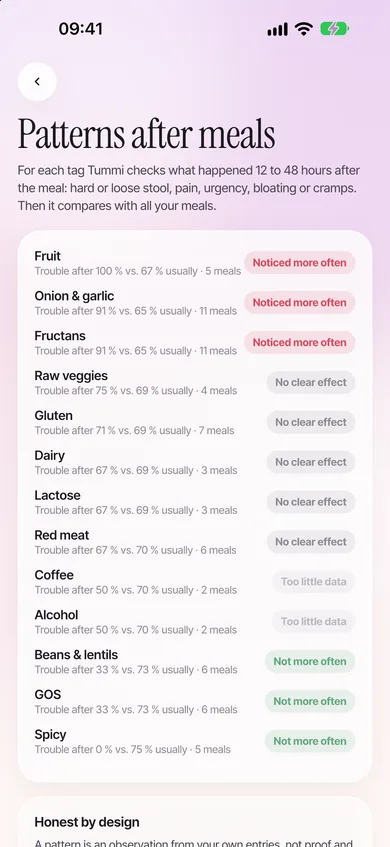
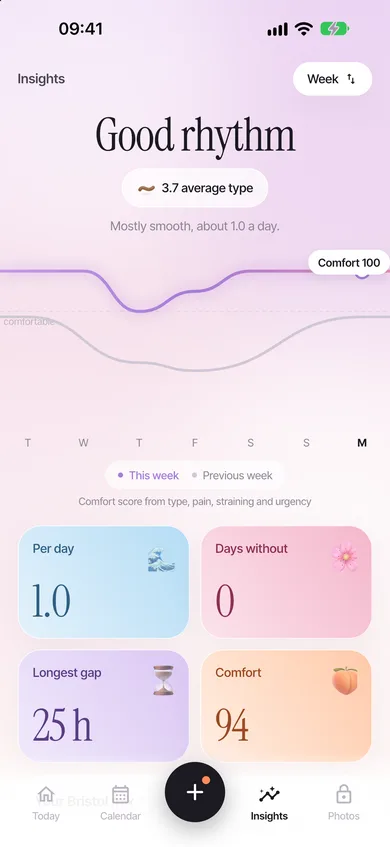
In Tummi you log meals with the five FODMAP groups and common suspects like coffee, gluten, dairy, alcohol or spicy food, together with symptoms and bowel movements. With Tummi Plus, the app compares each tag with how you felt 12 to 48 hours later, against all meals without it. It only shows "noticed more often" after at least three meals and a clear difference, and otherwise says honestly that there is not enough data yet. Everything stays on your iPhone.
Frequently asked questions
How long should I keep an IBS food diary?
At least two to four weeks. Many symptoms appear hours or a day after eating, and you need several similar meals before a pattern means anything.
Should I try the low FODMAP diet on my own?
Monash University recommends doing it with a dietitian or other health professional, and only after IBS has been diagnosed. It is a short learning diet with reintroduction, not a permanent diet.
What are the most common IBS trigger foods?
The NHS mentions fatty, spicy and processed food, caffeine, alcohol, fizzy drinks, the sweetener sorbitol and foods that are hard to digest like beans, cabbage and onions. Triggers are personal, which is why a diary helps.
Can stress trigger IBS symptoms?
Yes, for many people. The gut and brain influence each other. That is why it helps to note stress and sleep in your diary along with food.
What is a FODMAP list?
A list of foods grouped by their FODMAP content. The five groups are fructans, GOS, lactose, excess fructose and polyols. Portion size matters a lot, so lab tested data from Monash University is the most reliable reference.
Sources
Related guides
 Bowel diary
What to write down, a free printable template and how to read your diary after two weeks.
Bowel diary
What to write down, a free printable template and how to read your diary after two weeks.
 Bristol stool chart
What each of the seven poop types means, which ones are normal and a free printable chart.
Bristol stool chart
What each of the seven poop types means, which ones are normal and a free printable chart.
 Constipation relief
The steps health services recommend, in a sensible order, and the signs that should not wait.
Constipation relief
The steps health services recommend, in a sensible order, and the signs that should not wait.