 Tummi
TummiBristol stool chart: what your poop type means
The Bristol stool chart sorts poop into seven shapes, from hard lumps to liquid. It is the scale doctors use to talk about stool without anyone feeling awkward. Here is what each type means, which ones are normal and when a type is worth mentioning to a doctor.
What is the Bristol stool chart?
The Bristol Stool Form Scale, usually just called the Bristol stool chart or Bristol stool scale, was developed by Stephen Lewis and Ken Heaton at the Bristol Royal Infirmary in England and published in 1997. They showed that the shape of stool gives a rough idea of how long it spent in the gut: the longer it stays, the more water is taken out and the harder and lumpier it gets.
That makes the chart useful in two ways. It gives everyone the same words for something people find hard to describe, and it is a simple, repeatable way to notice change over time. Doctors, nurses and researchers use it, for example when asking about constipation or irritable bowel syndrome (IBS).
The 7 Bristol stool types at a glance
Type 1 has spent the longest time in the gut, type 7 the shortest. Tap a type to jump to the details.
| Type | What it looks like | What it often means |
|---|---|---|
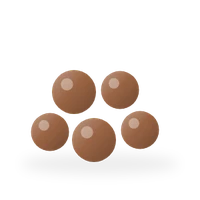 Type 1 Type 1 |
Separate hard lumps, like nuts | Constipation Hard to pass. The stool stayed in the gut for a long time. |
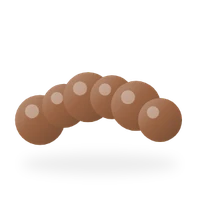 Type 2 Type 2 |
Sausage shaped, but lumpy | Mild constipation Firm and lumpy, often with straining. |
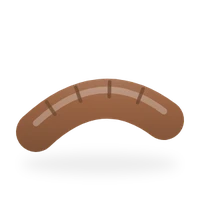 Type 3 Type 3 |
Like a sausage with cracks on the surface | Normal Well formed, maybe a little dry. |
 Type 4 Type 4 |
Like a smooth, soft sausage or snake | Ideal Soft, smooth and easy to pass. |
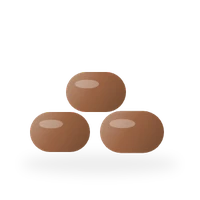 Type 5 Type 5 |
Soft blobs with clear cut edges | Normal to soft Passed easily, on the soft side. |
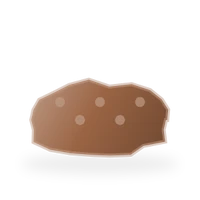 Type 6 Type 6 |
Fluffy, mushy pieces with ragged edges | Mild diarrhea Things moved through quickly. |
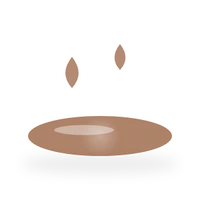 Type 7 Type 7 |
Watery, no solid pieces | Diarrhea Entirely liquid. |
Which Bristol types are normal?
Types 3 and 4 are usually called ideal: firm enough to hold together, soft enough to pass without straining. Some NHS bowel charts and the German federal health portal count type 5 as part of the normal range as well, especially if it passes easily and you feel fine.
Types 1 and 2 point toward constipation. Types 6 and 7 point toward diarrhea. One unusual poop says very little. A heavy dinner, travel, a stressful week or your period can all shift the type for a day or two. What matters is the pattern over several days or weeks, and whether something changes and stays changed.
It is also completely normal to see more than one type in a single sitting, for example a firm start and a softer end. In the Tummi app you can log several types for one bowel movement for exactly this reason.
Each type in more detail
Type 1: separate hard lumps
Small, hard pieces, a bit like nuts or pebbles, and often hard to pass. The stool has been in the large intestine for a long time. Type 1 is a typical sign of constipation, especially if you also go less than three times a week, need to strain or feel you have not finished.
Type 2: sausage shaped but lumpy
The pieces stick together into a sausage, but the surface is lumpy and the stool is firm. This usually means mild constipation. Common reasons are too little fiber or fluid, little movement, holding it in, travel, pregnancy and some medicines such as iron tablets or strong painkillers. Our guide to constipation relief lists the gentle steps the NHS recommends.
Type 3: sausage with cracks
Well formed with a few cracks on the surface. This is normal. If you often see type 3 and it takes some effort, a little more water and fiber may move you toward type 4.
Type 4: smooth and soft
Smooth, soft and easy to pass, like a sausage or a snake. This is the type most sources call ideal. It suggests stool moved through at a comfortable pace.
Type 5: soft blobs with clear edges
Soft pieces that keep their shape and pass easily. Type 5 sits at the soft end of normal. It is common after meals rich in fiber or fruit. If type 5 becomes your new normal together with urgency, cramps or bloating, it is worth noting in a diary and mentioning to a doctor.
Type 6: mushy, fluffy pieces
Mushy stool with ragged edges means things moved through quickly. It often counts as mild diarrhea. Common reasons include a stomach bug, food that did not agree with you, a lot of sugar free sweeteners (sorbitol), stress, alcohol and some medicines, for example antibiotics. Type 6 now and then is not a reason to worry. If it lasts more than a week, keeps coming back or comes with blood, fever or weight loss, see a doctor.
Type 7: watery, no solid pieces
Entirely liquid stool is diarrhea. Drink enough to replace lost fluid and watch how long it lasts. Most short bouts get better within a few days to a week. Get help quickly if you show signs of dehydration, see blood, or it lasts longer than a week. One surprising detail from NHS guidance: in people with severe constipation, liquid stool can leak around a hard blockage. That is called overflow and also needs a doctor.
What the chart cannot tell you
The Bristol scale only describes shape. It says nothing about colour, blood, mucus, pain or how often you go, and all of these matter at least as much. It is not a diagnosis either. Two people with type 6 can have completely different reasons for it.
- Colour: see our guide to poop colour meaning.
- Frequency: see how often you should poop.
- Babies: the chart was made for adults. Stool in babies, especially breastfed babies, is normally much softer. Ask your paediatrician what is normal for your child.
How to use the Bristol chart in a diary
The chart becomes really useful when you write the type down every time for a while. After two weeks you can answer the questions doctors usually ask: How often? Which type? Since when? What did you already try?
- Log the type right after you go. Memory fades fast, and nobody remembers last Tuesday's type.
- Add the context that matters to you. Meals, water, fiber, stress, sleep, your period or a new medicine.
- Look at weeks, not days. Is your mix drifting toward 1 and 2, or toward 6 and 7?
- Bring it to your appointment. A one page summary beats trying to remember six weeks in five minutes.
Prefer paper? Our bowel diary guide has a free printable template.
Frequently asked questions
What is the healthiest poop on the Bristol stool chart?
Types 3 and 4 are usually called the healthiest: formed, soft and easy to pass. Many sources count type 5 as normal too, as long as it passes easily and you feel well.
Is Bristol stool type 6 bad?
Not on its own. Type 6 means stool moved through quickly, often a mild diarrhea after a stomach bug, certain foods, stress or medicines. See a doctor if it lasts more than a week, keeps coming back, or comes with blood, fever, strong pain or weight loss.
Is Bristol stool type 5 normal?
Usually, yes. Type 5 is at the soft end of normal and common after fiber rich meals. If it is new for you and comes with urgency or cramps that do not go away, note it and talk to a doctor.
Can I have several Bristol types at once?
Yes. A firm start and a softer end in the same sitting is very common. You can log both.
Is there a printable Bristol stool chart?
Yes. You can download our free Bristol stool chart as a PDF with the seven illustrations from the Tummi app.
Who invented the Bristol stool chart?
Stephen Lewis and Ken Heaton at the Bristol Royal Infirmary in England. Their paper was published in the Scandinavian Journal of Gastroenterology in 1997.
Sources
- Lewis SJ, Heaton KW. Stool form scale as a useful guide to intestinal transit time. Scand J Gastroenterol 1997;32:920 to 924
- Cleveland Clinic: Bristol Stool Chart
- Continence Health Australia: Bristol stool chart
- Hertfordshire Partnership University NHS Foundation Trust: Bristol Stool Chart
- NHS: Constipation
- NHS: Symptoms of bowel cancer
Related guides
 How often should you poop?
From three times a day to three times a week: what is normal and what changes your rhythm.
How often should you poop?
From three times a day to three times a week: what is normal and what changes your rhythm.
 Poop color meaning
Why poop is brown, which colours are harmless and which three deserve a closer look.
Constipation relief
The steps health services recommend, in a sensible order, and the signs that should not wait.
Poop color meaning
Why poop is brown, which colours are harmless and which three deserve a closer look.
Constipation relief
The steps health services recommend, in a sensible order, and the signs that should not wait.