 Tummi
TummiConstipation relief: gentle steps that help
Constipation is common and usually harmless, but it can make you feel heavy, bloated and miserable. Most of the time, small changes help within days to weeks. Here are the steps the NHS and other health services recommend, in a sensible order, and the signs that mean you should not wait.
Short answer
Drink enough, add fiber slowly, move every day, take time on the toilet after a meal, do not hold it in and rest your feet on a low stool. If that does not help within a few days to weeks, a pharmacist can suggest a laxative for short term use. See a doctor if it does not improve, keeps coming back, or comes with blood, weight loss or strong pain.
Is it constipation?
According to the NHS, it is likely constipation if you have not had a poo at least three times in the last week, or if your stool is often large, dry, hard or lumpy (Bristol type 1 or 2), you have to strain, or you feel you have not finished. Mayo Clinic calls it chronic when two or more of these symptoms last three months or longer.
Seven gentle steps that help
- Add fiber, slowly. Fruit, vegetables, wholegrains, oats, linseed, pulses, kiwi or prunes. Psyllium husk is a popular supplement. Increase over one to two weeks, or you may get more bloating. US guidance suggests 22 to 34 grams of fiber a day for adults.
- Drink with your fiber. Fiber needs water to soften stool. Spread water and other drinks over the day and go easy on alcohol.
- Move a little. A daily walk or run helps your gut move too. It does not need to be a workout.
- Use the morning. The colon is most active after eating. A calm few minutes on the toilet after breakfast can help build a routine.
- Do not hold it in. When you feel the urge, go. Repeatedly ignoring it makes stool harder.
- Lift your feet. Resting your feet on a low stool so your knees are above your hips brings you closer to a squat. The NHS recommends it, and many people find it makes a real difference.
- Ask a pharmacist. If these changes are not enough, a pharmacist can recommend a laxative. The main types are bulk forming (like psyllium), osmotic (like macrogol or lactulose, which draw water into the bowel) and stimulant laxatives (like bisacodyl or senna, which can cause cramps). The NHS says most work within three days and they should only be used for a short time, unless a doctor advises otherwise.
Improvement often takes a few days, sometimes a few weeks. Change one or two things at a time and give them a week, so you can see what actually helps you.
What about fast constipation relief?
There is no magic trick. A warm drink and a calm moment on the toilet after breakfast, with your feet raised, is the gentlest start. If you need relief quickly, a pharmacist can explain options such as suppositories, which usually act faster than tablets. Please ask before using them, especially for children, during pregnancy, if you take other medicines or if this keeps happening.
Special situations
- Children: constipation is common in children too. Talk to your GP or paediatrician before giving laxatives, and go soon if it hurts or lasts more than a few days.
- Pregnancy: very common. Fiber, fluids and movement come first. Ask your midwife, doctor or pharmacist before taking a laxative.
- Medicines: iron, strong painkillers (opioids) and GLP-1 medicines such as semaglutide can cause constipation. Do not stop a prescribed medicine on your own, but tell the person who prescribed it.
- Older adults: constipation becomes more common with age, often because of less movement, less fluid and more medicines.
Track what you try
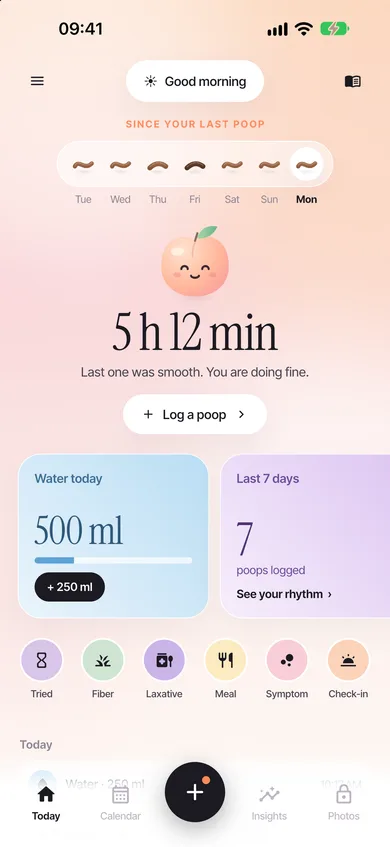
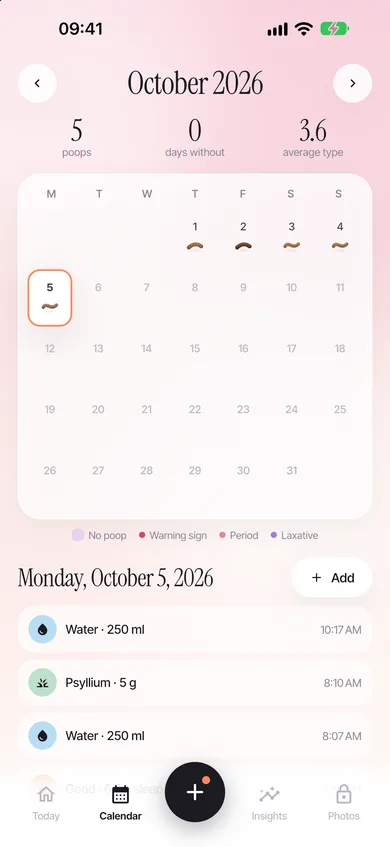
Writing down what you tried and when you went next quickly shows what works for you. Did the extra water help? How many hours did the laxative take? That is also exactly what your doctor will ask. Our bowel diary guide has a free printable template.
Frequently asked questions
How long can you go without pooping?
There is no fixed number of days. Fewer than three times a week counts as constipation. If you also have strong belly pain, a swollen belly, vomiting or cannot pass wind, get medical help right away.
What drinks help you poop?
Water and other non alcoholic drinks help fiber work. Many people find a warm drink or coffee in the morning gets things going. Alcohol tends to make constipation worse.
Do probiotics help constipation?
Results are mixed. German health guidance suggests trying a product for four to six weeks and stopping if it does not help.
Is it OK to take laxatives every day?
The NHS says laxatives should only be used for a short time unless a doctor advises otherwise. If you need them regularly, talk to your GP.
When should I see a doctor for constipation?
If it does not get better with self-care, keeps coming back, or comes with blood, weight loss, tummy pain, tiredness or a change in your bowel habits that lasts for weeks.
Sources
Related guides
 How often should you poop?
From three times a day to three times a week: what is normal and what changes your rhythm.
How often should you poop?
From three times a day to three times a week: what is normal and what changes your rhythm.
 Bristol stool chart
What each of the seven poop types means, which ones are normal and a free printable chart.
Bristol stool chart
What each of the seven poop types means, which ones are normal and a free printable chart.
 Bowel diary
What to write down, a free printable template and how to read your diary after two weeks.
Bowel diary
What to write down, a free printable template and how to read your diary after two weeks.